For the jeweller who makes pieces, every piece tracked from bill of materials to quality control
Metal by the gram, stones, workshop hours: the production order reserves the material, keeps a record of each step and gives the true cost of the piece.
- True cost compared with planned cost
- Quality control signed by a second person
- Creations and repairs in the same tool
What slips away in the workshop without a tool
An estimated cost price
Melted metal, scrap, hours spent: without measuring, the cost of a piece remains an estimate.
A piece’s steps, with no record
A cracked stone, a rework, a dispute: with no record of the steps, the story cannot be reconstructed.
Metal that changes hands
The wire reserved for one order goes to another; metal brought in by a customer gets mixed with yours.
Creations and repairs on the same bench
Two queues, different deadlines, and a single team to keep it all going.
The workshop, screen by screen
Production, repairs and material purchasing, on the software’s actual screens.
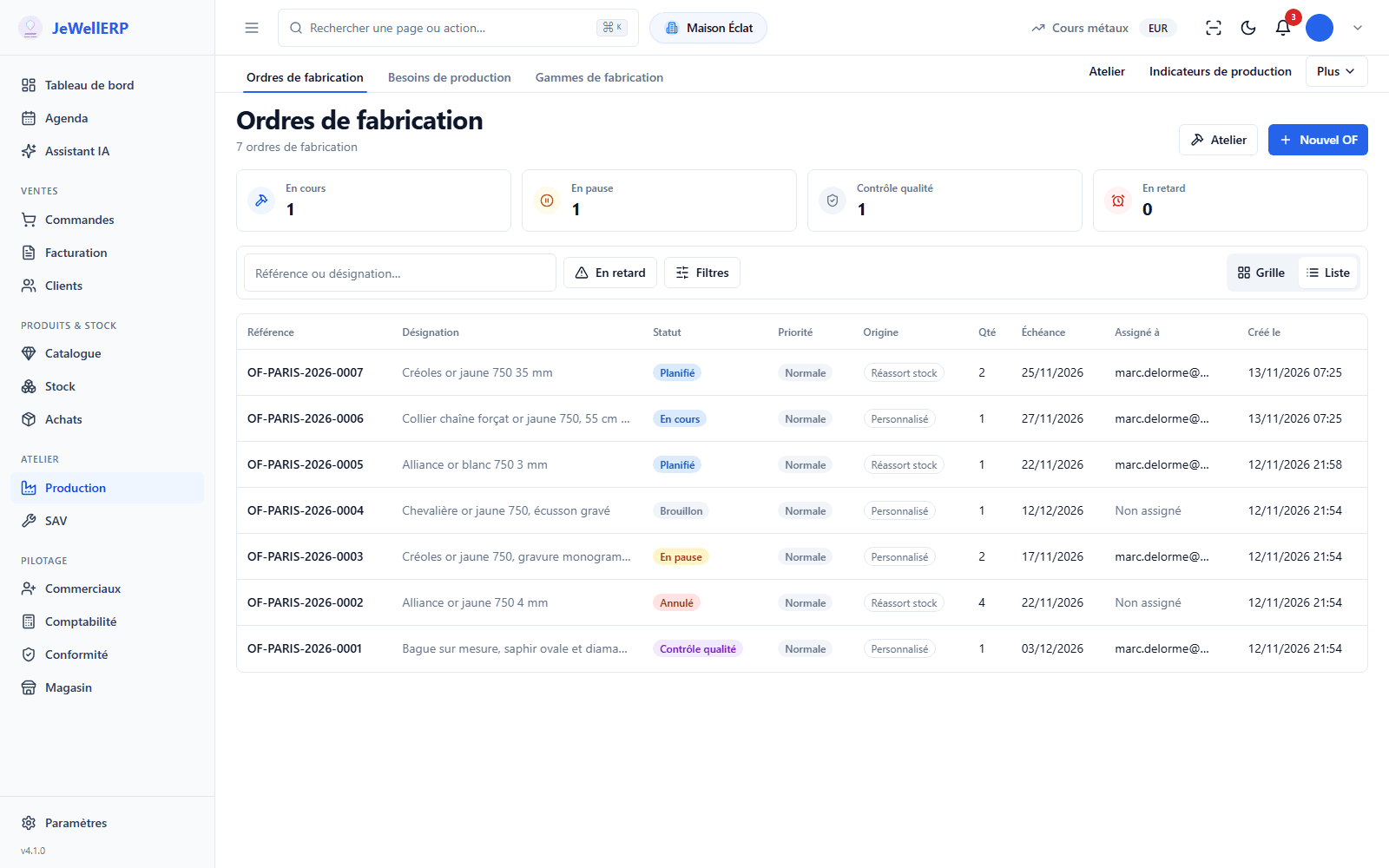
Every piece made has its order
What needs doing, by when, and where it stands. The workshop load is read from four counters: in progress, paused, in quality control, late.
- Order launched from a model and its bill of materials
- Stock replenishment or custom order
- Due date and priority on each line
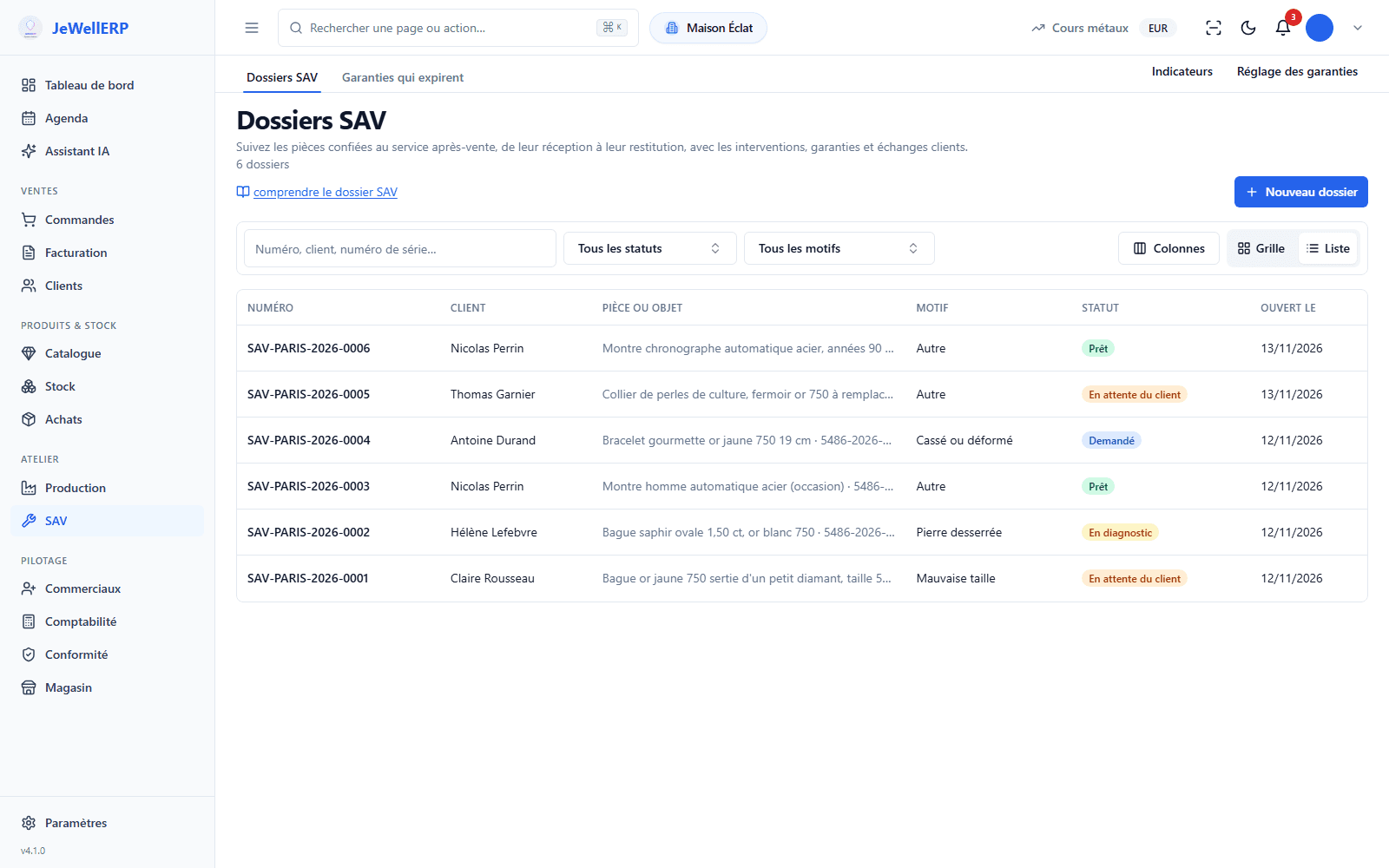
One job per piece left with you
The customer, the piece, the reason and the progress. The accepted quote starts the repair order; the invoice goes out at collection.
- Photos and reason at intake
- Metal left by the customer entered in the register
- Warranty with its expiry date
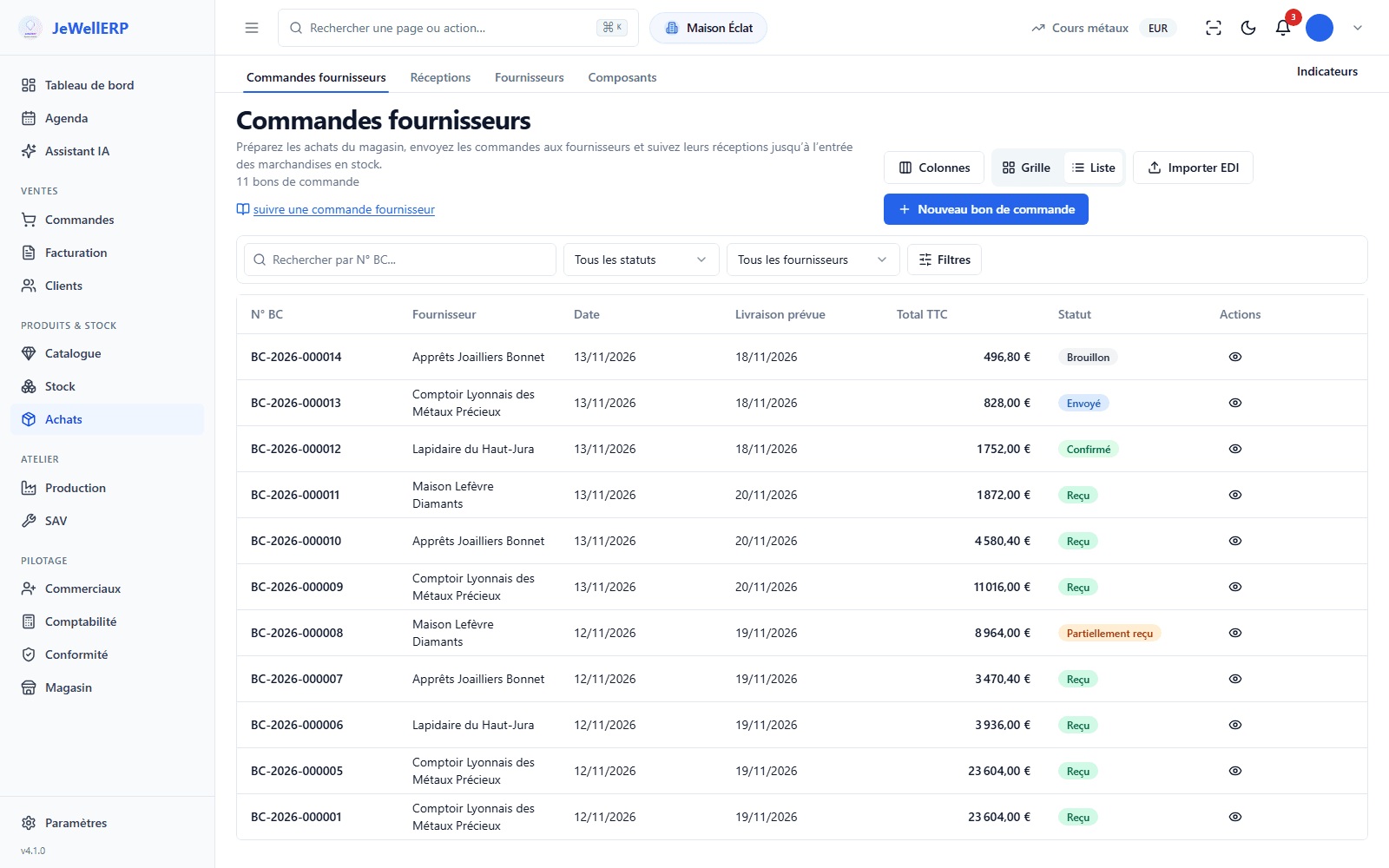
Metals, stones and findings ordered, then received
Each purchase order follows its approval flow. The goods receipt brings the material into stock, with its lots and stones.
- Approval before it is sent to the supplier
- Partial or full receipt
- Entry into stock on receipt
A production order, from launch to finished piece
- The material is reservedThe order starts from the bill of materials: metal by the gram, stones, hours. If stock is short, it is blocked before it begins.
- Every step leaves a recordA step can require a photo: without one, it is refused. Components are scanned as they go through.
- A second pair of eyesQuality control is signed by someone other than the person who made the piece.
- The metal actually usedAt the end of the order, the actual metal consumption leaves stock. A difference from the bill of materials must be explained.
Your questions
From the bill of materials: metal by the gram, stones and workshop hours.
At the end of the order, the actual metal consumption is recorded: you compare what the piece cost with what was planned.
Yes. Each production order states whether it is a stock replenishment or a custom order, with its due date.
Yes. Metal left for a repair or a creation is entered in the Police Book (Livre de Police), the register of precious-metal and second-hand purchases and sales.
Yes. Users are unlimited in every plan, and each has a role: manager, salesperson, workshop, accountant.
The recommended plan
Essentiel plan
The workshop, repairs, stock and the Police Book are in the Essentiel plan, for one shop and your whole team.
- 1 shop
- Unlimited users
- All features except the WordPress website
- Sales, stock, workshop, after-sales, gold buying, stocktake, Police Book
- E-invoicing, supplier EDI, configurator, Shopify
€249excl. VAT per month
Or €2,490 excl. VAT per year, i.e. 10 months paid instead of twelve.
Optional onboarding: €490 excl. VAT, one-off.
Launch offer: free standard onboarding for the first 10 customers, with any monthly or yearly subscription taken out up to and including 31 March 2027.
Do you also sell to trade customers? See the Manufacturer and wholesaler page
See JewellERP on the cases of your jewellery shop
A no-obligation demo on your own pieces and jobs. Or a 14-day free trial, on an instance we set up for you.